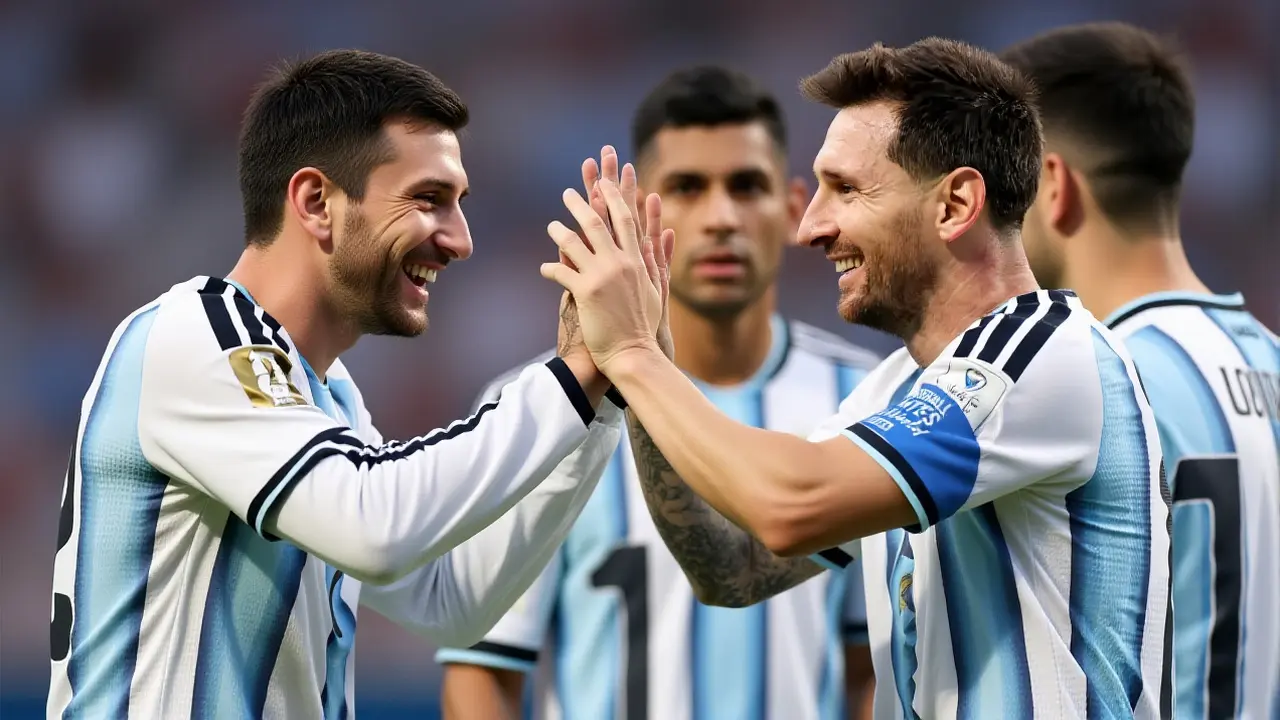
When Lionel Messi, forward for the Argentina national team stepped onto the pitch on Monday, June 22, 2026, he wasn't just chasing a win. He was hunting history. The defending world champions faced a tough test against Austria in what analysts called a "direct battle for top spot" in Group J of the 2026 FIFA World CupMiami. Turns out, Messi didn't just secure the three points; he etched his name deeper into the record books.
The stakes were sky-high before kickoff. Both teams had opened their campaigns with impressive victories—Argentina thumped Algeria 3–0, while Austria edged Jordan 3–1. They sat level on three points, but Argentina held a narrow +3 goal difference advantage over Austria’s +2. A win would send the holders to six points, virtually guaranteeing their path to the Round of 32 and control over their seeding. A draw? It would keep them top on tiebreakers but leave things messy. A loss? That would have handed Austria the initiative and left Argentina scrambling. Instead, Messi delivered a masterclass.
Messi Breaks All-Time World Cup Goal Record
Here’s the thing that had everyone talking: Messi scored twice. Not just any goals, but his 17th and 18th career World Cup strikes. That second goal broke the all-time tournament scoring record, previously shared with Germany’s Miroslav Klose. It was a quiet dominance rather than a flashy explosion—Argentina controlled the game with an expected goals (xG) ratio of 2.65 to 0.5. The final scoreline read 2–0, a clean sheet that highlighted the team's defensive solidity under pressure.
"It’s not just about the number," one tactical analyst noted post-match. "It’s about the efficiency. They created high-quality chances and converted them when it mattered most." For Argentina, this wasn’t just a statistical milestone; it was a psychological blow to their opponents and a massive boost for their own confidence heading into the knockout stages.
How the Result Reshaped Group J
The immediate impact was mathematical certainty. With six points from two games, Argentina officially secured qualification for the Round of 32 before even playing their final group match against Jordan. But there was more to it than just advancing. Because of the head-to-head tiebreaker rule, Argentina’s victory meant they could not be overtaken by Austria for first place, regardless of other results. This locked them into the top seed for Group J.
Why does finishing first matter? In the expanded 48-team format, the winner of each group avoids the winners of other groups until later rounds, often leading to a theoretically easier early knockout path. By topping the table, Argentina avoided a potential clash with heavyweights like Spain or England in the Round of 32. Instead, their draw was set against Cape Verde—a formidable opponent, but one perceived as less dangerous than a European powerhouse.
The Battle for Second Place
While Argentina celebrated, the drama shifted to the remaining teams. Austria, now on three points after the loss, found themselves in a tight race with Algeria, who also had three points. Jordan, having lost both matches, were mathematically eliminated. The final group-stage match between Austria and Algeria became a de facto semi-final for the runner-up spot.
Both teams knew that a win would likely secure second place directly. A draw would leave them tied on four points, with tiebreakers deciding fate. Austria held the advantage in overall goal difference and had already beaten Jordan, giving them a slight edge. The tension was palpable, especially given the historical context of African-European rivalries in major tournaments.
Final Standings and Knockout Implications
In the end, the Austria-Algeria match ended in a draw, resulting in a fascinating conclusion. Both teams finished with identical records: one win, one draw, one loss, and four points. However, Austria took second place based on superior goal difference (+0 vs -2). Algeria, despite finishing third, advanced as one of the eight best third-placed teams across the 12 groups—a key feature of the new World Cup format.
This outcome had ripple effects beyond Group J. The draw effectively eliminated Iran from contention for the knockout stage, as Austria and Algeria’s combined points and tiebreaker strength pushed them ahead of the Iranian side in the global rankings for third-place teams. It was a harsh reminder of how interconnected the groups are in the modern tournament structure.
Argentina completed the group stage with a perfect record: three wins, nine points, and a +7 goal difference. They topped Group J comfortably, setting up a Round of 32 clash against Cape Verde in Miami. Austria will face Spain in a daunting matchup, while Algeria heads to Vancouver to take on Switzerland.
What Experts Are Saying
Football pundits are split on whether Argentina’s dominance is sustainable. Some argue that Messi’s age (now well into his late 30s) makes such consistent brilliance unsustainable, while others point to the team’s tactical evolution under manager Lionel Scaloni as the real secret weapon. "They’ve adapted," said former player Javier Mascherano. "They’re not just relying on individual talent anymore; they’re a system. And right now, it’s working perfectly."
Others focus on the physical toll. Playing at this intensity in the summer heat of North America is grueling. Can Argentina maintain this pace through the quarterfinals and beyond? Time will tell, but for now, the defending champions look unstoppable.
Frequently Asked Questions
Did Lionel Messi break the World Cup scoring record?
Yes, Messi scored his 17th and 18th World Cup goals in the 2–0 win over Austria on June 22, 2026, surpassing Miroslav Klose’s previous record of 16 goals. This historic achievement cemented his status as the tournament’s all-time top scorer.
Who did Argentina play in the Round of 32?
By finishing first in Group J, Argentina was drawn against Cape Verde in the Round of 32. The match took place in Miami, avoiding a potentially tougher early encounter with group winners like Spain or England.
How did Austria and Algeria advance despite drawing their final match?
Both teams finished with four points. Austria took second place in Group J due to a better goal difference, qualifying directly. Algeria finished third but advanced as one of the eight best third-placed teams across all groups, a provision of the 2026 World Cup format.
Why was Iran eliminated from the knockout stage?
Iran was eliminated because the draw between Austria and Algeria resulted in both teams accumulating enough points and tiebreaker strength to rank higher than Iran among the third-placed teams globally. This meant only eight third-placed teams could advance, and Iran fell outside that cutoff.
What was the significance of Argentina’s 2–0 win over Austria?
The win gave Argentina six points from two games, mathematically securing their place in the Round of 32. Crucially, it also ensured they topped Group J via head-to-head tiebreakers, granting them a more favorable knockout bracket position compared to finishing second.