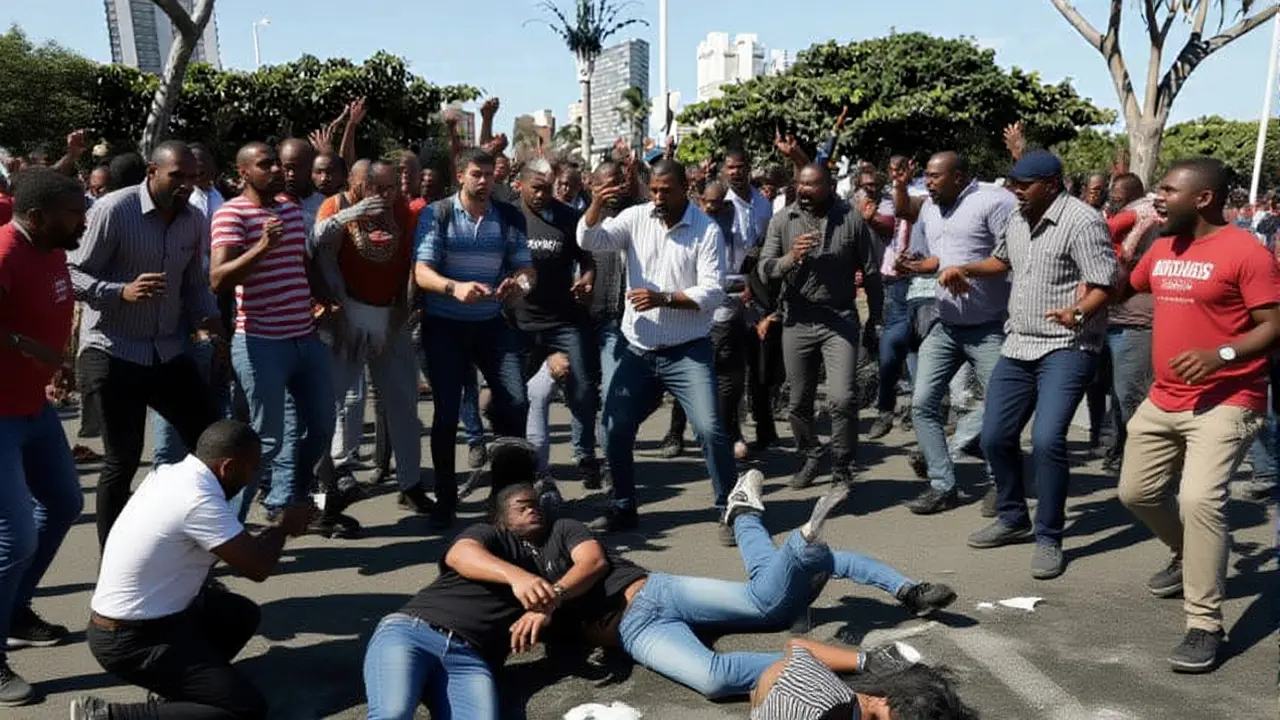
Foreign nationals in Durban are sleeping on pavements, terrified to return home. This isn't a drill or a rumor—it’s the grim reality for hundreds of African and Asian migrants in the eThekwini municipality during April and May 2026. They fled their communities after facing intimidation and violent protests fueled by anti-immigration sentiment. The situation has escalated from verbal threats to physical displacement, leaving many stranded in public spaces with nowhere safe to go.
The crisis is being driven by citizen-led movements demanding stricter immigration enforcement. While authorities attempt to manage the fallout, the fear among foreign residents is palpable. Some have been camped out for weeks, waiting for signs that it’s safe to reclaim their lives. But the danger hasn’t passed. Instead, it’s spreading, fueled by misinformation and a lack of decisive police action.
The Rise of Vigilante Movements
At the heart of this unrest is a group called March and March, a citizen-led movement advocating for harsher measures against undocumented migrants. In recent weeks, they organized demonstrations across major cities, including Pretoria, Johannesburg, and Durban. What started as protests quickly turned violent, with reports of fatal outcomes and widespread harassment.
Leading the charge are high-profile figures who have become faces of the anti-foreign narrative. Among them is Jacinta Zuma, alongside Ngizwe Mchunu and actor Nkosikhona Ndabandaba, known publicly as Phakel’umthakathi. Their rhetoric has resonated with some segments of the population, creating an environment where vigilante justice feels permissible to those involved. It’s a dangerous mix of political activism and mob mentality.
Here’s the thing: these aren’t isolated incidents. Since 2008, when 62 people were killed in xenophobic violence—including South Africans and citizens from Mozambique, Zimbabwe, and Somalia—South Africa has seen intermittent waves of such hostility. The current wave mirrors past tragedies but adds new layers of complexity through social media amplification and organized disinformation campaigns.
Disinformation Fuels Panic
Adding fuel to the fire is a viral graphic claiming that the government set a deadline of June 30, 2026, for all undocumented foreigners to leave the country. The image bore the official coat of arms and contact details for the Department of Home Affairs, making it look authentic. Many believed it was real.
But wait—this notice was fake. Generated using artificial intelligence, it was designed to cause panic. On May 14, 2026, the South African Police Service (SAPS) issued a statement calling the poster “fake” and part of a disinformation campaign aimed at misleading communities. They emphasized that no such directive exists and urged the public to rely only on official communication channels.
Despite this clarification, the damage was done. Fear spread rapidly, especially among foreign nationals who felt targeted by calls for mass departure. Even though the date itself wasn’t official, its impact was very real. People packed bags, abandoned businesses, and sought refuge wherever they could find safety.
A Legal Precedent Ignored
What makes this situation even more troubling is that it defies established legal boundaries. Back in November 2025, the Johannesburg High Court ruled clearly: private citizens do not have the right to check someone else’s immigration status. That power belongs solely to the state. Yet here we are, months later, with vigilantes still enforcing their own version of border control.
In one operation described by Daily Maverick, officials checked the papers of 457 foreign nationals at a specific location. Only two lacked proper documentation. That’s less than half a percent. So why the hysteria? Why the fear-mongering?
The answer lies in the gap between law and practice. Just because something is illegal doesn’t mean people stop doing it. And just because the court says you can’t demand ID from strangers doesn’t mean mobs won’t try anyway. Foreign nationals camping in Durban were ordered to prove their legal status despite the ruling—a clear violation of both human rights and judicial authority.
Human Cost and Global Response
Behind every statistic is a person. A family. A story. Human Rights Watch highlighted the insufficient response from police and other authorities, noting how little protection existed for victims of these attacks. For many displaced individuals, life became a series of sleepless nights on cold pavement, wondering if tomorrow would bring relief—or worse.
For U.S. citizens affected by the chaos, there is some recourse. The American consular post in Durban, located at 303 Dr. Pixley KaSeme Street (formerly West Street), offers support via phone numbers +27-31-310-3300 or +27-31-305-7600. However, the embassy in Pretoria does not provide direct consular services, underscoring the importance of regional offices like the one in Durban.
This isn’t just about immigration policy anymore. It’s about basic human dignity. About whether everyone deserves to feel safe in their own neighborhood. Right now, thousands don’t.
What Comes Next?
As June approaches, tensions remain high. With the fabricated June 30 deadline looming, activists continue to push their agenda while governments struggle to regain control. Will there be another spike in violence? Can trust be rebuilt between communities divided by fear?
Experts warn that without stronger intervention—from law enforcement, policymakers, and civil society—the cycle will repeat. History shows us that silence enables hatred. Action stops it.
Frequently Asked Questions
Who is leading the anti-immigration protests in South Africa?
The primary organization behind the recent protests is March and March, a citizen-led group advocating for stricter immigration laws. Key figures include Jacinta Zuma, Ngizwe Mchunu, and actor Nkosikhona Ndabandaba (Phakel’umthakathi). These individuals have emerged as prominent voices promoting anti-foreign narratives.
Is the June 30, 2026 deadline for undocumented foreigners to leave South Africa real?
No, the June 30, 2026 deadline is completely false. It originated from an AI-generated fake poster mimicking government documents. The South African Police Service officially debunked the claim on May 14, 2026, stating that no such directive exists and warning against relying on unauthorized sources.
Can ordinary citizens legally check immigration documents in South Africa?
Absolutely not. In November 2025, the Johannesburg High Court ruled that only state authorities have the legal power to verify immigration status. Private citizens attempting to enforce immigration rules violate the law and infringe upon individual rights.
How many people died in previous xenophobic attacks in South Africa?
In the most deadly outbreak in 2008, 62 people lost their lives. Victims included 21 South Africans, 11 Mozambicans, 5 Zimbabweans, and 3 Somalis. Since then, periodic outbreaks have occurred, though none matched the scale of the 2008 tragedy until recently.
Where can U.S. citizens get help if caught up in xenophobic violence in Durban?
U.S. citizens should contact the Consulate General in Durban at 303 Dr. Pixley KaSeme Street, Delta Towers, Floor 31. Phone lines are +27-31-310-3300 or +27-31-305-7600. Note that the U.S. Embassy in Pretoria does not offer direct consular assistance.
Why are foreign nationals camping on streets in Durban?
Many foreign nationals fled their homes due to threats and intimidation linked to anti-immigration protests. Fearing retaliation upon returning, some have been forced to live outdoors for over two weeks, seeking temporary safety in public areas until conditions improve.





Gaurav Jangid
June 9, 2026 at 14:56
Oh my god!!! This is absolutely heartbreaking and terrifying!! 😱😭 How can people be so cruel to their own neighbors?? It makes me want to scream at the top of my lungs!! The fear must be unimaginable for these families!!